Social stigma faced by unmarried mothers and their children
Small Things Like TheseSocial stigma faced by unmarried mothers and their children is a force that turns private circumstances into lasting social labels and unequal treatment. In Bill Furlong’s life, it begins before his birth: his mother is rejected by her family, while he grows up marked by the uncertainty surrounding his father. In the town’s treatment of Sarah Redmond, the same stigma helps render a young woman’s confinement and separation from her baby ordinary, and makes public recognition of her dignity conspicuously rare.
Origins and Inheritance
Bill Furlong’s mother was sixteen and working as a domestic for Mrs Wilson when she became pregnant. Her family made clear that they wanted nothing more to do with her. Mrs Wilson, a Protestant widow with a home and livelihood of her own, did not dismiss her: she told her to stay and keep her work, arranged for her to go to hospital when Bill Furlong was born on 1 April 1946, and brought mother and child home. That protection changes the course of their immediate circumstances, but it does not erase the stigma that had prompted the family’s rejection.
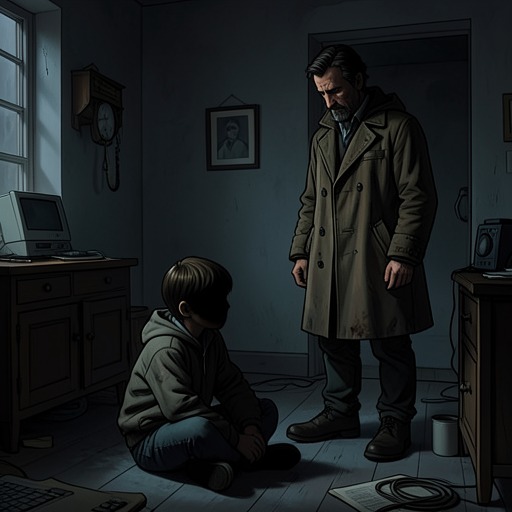
Bill Furlong spent his infancy in a Moses basket in Mrs Wilson’s kitchen, then in a large pram beside the dresser. Mrs Wilson took him under her wing, gave him small jobs, and helped him learn to read. Her support gave him both shelter and a degree of protection in a town where his origins could make him a target. At school, children jeered at him and called him ugly names; once, he came home with the back of his coat covered in spit. His connection to Mrs Wilson’s household gave him some leeway, but the incident shows that a child could be made to bear the disgrace attached to his mother’s circumstances.
The uncertainty followed Bill Furlong into adulthood. His mother died suddenly when he was twelve, and years later, when he obtained a copy of his birth certificate, the space for his father’s name read Unknown. The clerk handed it to him with an ugly smile. The record’s blankness and the clerk’s expression turn a missing piece of family history into a public occasion for contempt: the stigma is not only inherited but renewed through ordinary encounters with institutions and neighbors.
Labels, Rumor, and Confinement
The town’s talk about the girls at New Ross Good Shepherd Convent reveals how stigma can be sustained even when the facts are disputed. The Good Shepherd Sisters ran a training school and a laundry whose work was trusted by local businesses, the hospital, and well-off households. Alongside that respectable reputation circulated claims that the girls were not students but young women being reformed through penance and washing dirty linen from dawn until night. One report concerned a fifteen-year-old treated for varicose veins after standing for so long at the wash-tubs.
Other stories described the convent as a place where unmarried girls were hidden after giving birth, sometimes by their own families, while their children were adopted by wealthy Americans or sent to Australia. These accounts were town rumors, not established facts; the narration stresses that much local talk could not be believed. Yet the rumors themselves disclose the terms by which the girls were discussed: as people of supposedly low character, as family troubles to be concealed, and as mothers whose children could be placed elsewhere. The uncertainty does not cancel the social pattern the gossip exposes. Rather, the community can circulate alarming allegations while also dismissing them as idle talk.
When Bill Furlong challenges Eileen Furlong’s acceptance of the girls’ treatment, the disagreement brings that pattern into his own marriage. Eileen says that girls get into trouble and argues that the girls at the convent had been abandoned by people who should have cared for them. She also frames security in terms of staying on the right side of others and protecting their own children from such a fate. Bill Furlong asks what would have happened if the same circumstances had befallen one of their daughters, then points to Mrs Wilson’s choice: without her, where would his mother have gone, and where would he be? Their exchange sets inherited vulnerability against the protection that money, position, and an individual decision can provide. Eileen’s reminder that Mrs Wilson owned a farm and could do as she pleased also makes clear how exceptional that protection was.
Sarah Redmond and the Public Gaze
At the convent, Sarah Redmond’s concern for her baby brings the consequences of separation into a brief, direct plea. She asks Bill Furlong to ask about the child, saying that he must be hungry and wondering who is there to feed him now. Her words redirect attention from the label attached to a girl in trouble to the continuing bond between a mother and her infant. The baby’s absence is not an abstract matter of reputation: it is the circumstance occupying her as she waits outside the institution.
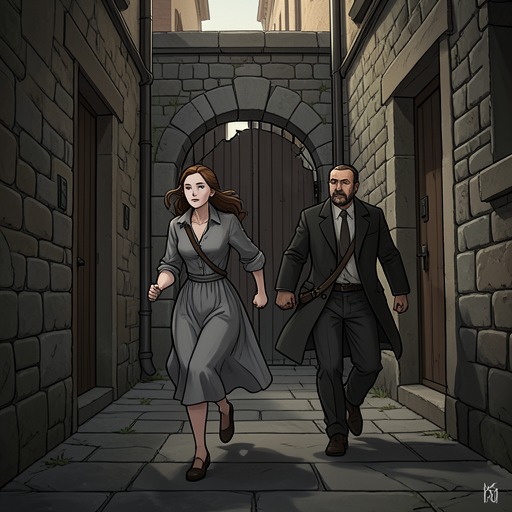
When Bill Furlong later walks with Sarah Redmond through town, the stigma becomes visible in how other people look at them—and in what they do not ask. People who know Bill Furlong stop to speak, then notice Sarah’s bare, black feet and realize she is not one of his own children. Some keep their distance; others offer an awkward greeting and move on. An elderly woman identifies her as one of the laundry girls and challenges Bill Furlong about who she is. A boy laughs at Sarah’s feet and calls her dirty, until his father sharply tells him to be quiet. Miss Kenny, assuming Sarah is one of Bill Furlong’s daughters, instead asks why a child is outside in the snow without shoes. The reactions differ, but Sarah is not addressed by anyone or asked where she is going.
That silence is part of the social exclusion. The people around Sarah can recognize her as a category—the laundry girl—without treating her as someone entitled to explain herself or be asked about her destination. Bill Furlong smooths over encounters and keeps walking, feeling both excitement and fear about what lies ahead. His decision to take her through the route he would ordinarily use puts her in public view rather than keeping her hidden. The stigma remains around them, but it is no longer left entirely unchallenged or unseen.
Protection and the Limits of Sympathy
The contrast between Mrs Wilson’s intervention and the town’s conduct around Sarah Redmond shows that stigma does not determine every response, but that protection is uneven. Mrs Wilson could keep Bill Furlong’s mother in her employment and house because she had a home, a pension, and a farm; the story does not present her choice as readily available to everyone. Eileen Furlong’s emphasis on security likewise shows how fear of social judgment can encourage families to distinguish their own children from girls who have been cast out.
Bill Furlong’s history makes that distinction harder for him to accept. The boy protected by Mrs Wilson was also the boy mocked at school, and the adult who built a life for his wife and five daughters still carries the mark of an unknown father and a mother rejected by her family. In standing beside Sarah Redmond, he acts from an awareness of how much one person’s choice can alter another’s prospects. The novel connects that small act of protection to a broader indictment of a community that can notice a girl’s bare feet, repeat stories about her, and still fail to ask what she needs.